CISA has officially updated its list of actively targeted security vulnerabilities, now including specific flaws in Broadcom VMWare ESX and the Linux kernel. Security teams should prioritize patching these items as they are currently being leveraged by malicious actors in real-world attacks.
AWS introduced pre-built Ray Train Deep Learning Containers (DLCs) that consolidate PyTorch, CUDA, NCCL, and EFA networking libraries into a single tested image. This approach allows your team to deploy distributed training clusters on Amazon EKS without maintaining custom build pipelines or resolving complex driver compatibility issues.
AWS has updated its QA Studio reference solution, adding native support for multi-team organizational structures. The new capabilities include application-level ownership, automated health scoring based on CloudWatch metrics, and granular role-based access control.
Google has announced Gemini 4 Carbon, a new high-performance model designed for complex engineering and cybersecurity. The model excels in vulnerability detection, secure patching, and long-horizon reasoning, while introducing improved alignment and prompt-injection resistance.
NVIDIA has introduced Nemotron 3.5 Transcribe, an open-weight, promptable model for speech-to-text, speaker diarization, and translation. It utilizes a hybrid Mamba-Transformer architecture to achieve industry-leading performance with only 4 billion active parameters.
AssemblyAI has released AssemblyAI-TTS-1, a text-to-speech model built for voice agents. It features sub-100ms latency, 4,000+ available voices, and instant voice cloning, priced at $15 per 1M characters without concurrency limits.
Researchers have proposed LOTUS, a framework for hallucination detection that uses multilinear low-rank decomposition to extract signals from hidden LLM layers. By analyzing peak activations and cross-layer patterns, the method identifies incorrect responses more effectively than existing pooling-based techniques.
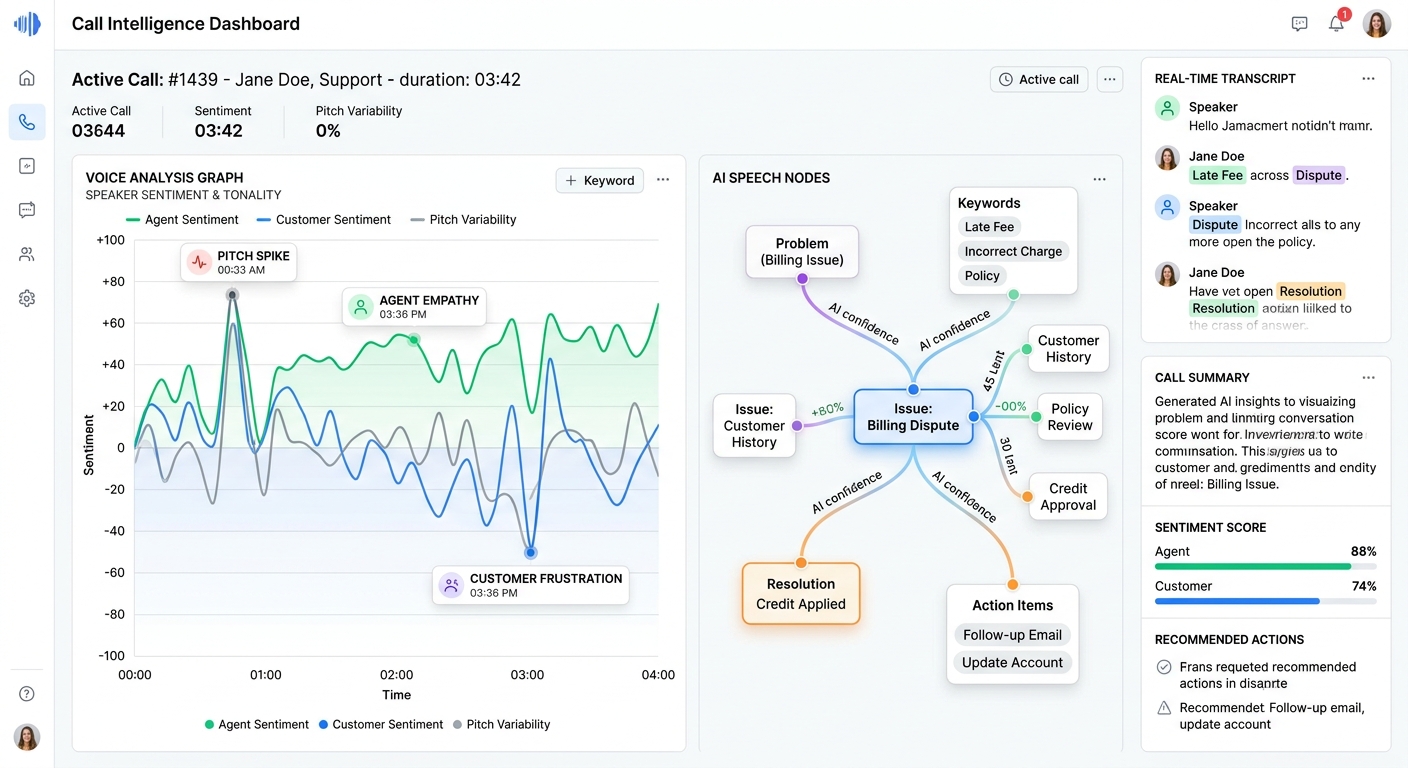
Analytics platform has been launched — a platform that transcribes every phone call, scores it against your company’s own quality criteria and turns the results into agent KPIs and coaching. It connects to 3CX, Asterisk, XCALLY, Genesys Cloud, Avaya and Cisco phone systems and works with Lithuanian, Latvian and English calls.
Mitsubishi Electric has released security updates to address multiple vulnerabilities across several industrial automation products, including GENESIS64 and the ICONICS Suite. These flaws could allow attackers to execute arbitrary code, bypass authentication, or cause denial-of-service conditions.
Google Project Zero analyzed how LLM-based systems (BigSleep) compare to traditional generative fuzzers (Fuzzilli) in finding V8 JavaScript engine vulnerabilities. Over six months, both methods independently discovered unique bugs, with an estimated overlap of approximately 25-60%.
NVIDIA has released 'Nemotron-Personas' datasets for France and Belgium, designed to improve LLM accuracy regarding regional procedures, demographics, and cultural nuances. The update provides a complete post-training workflow—including data generation, LoRA fine-tuning via NVIDIA NeMo, and evaluation—to help developers transition from generic models to domain-specific agents.
Google DeepMind introduced Genie 4, a multimodal world model that enables real-time interactive simulations. It natively generates video, ambient audio, and responsive dialogue, utilizing Gemini 3.8 Flash to maintain physical consistency and handle multi-step reasoning.
Google has launched Gemini Robotics Embodied Reasoning 2 (ER 2) in public preview on the Gemini platform. This model acts as a high-level cognitive layer for robotics, capable of planning, self-correcting tasks, and managing multi-robot systems via natural language instructions.
Cloudflare identified a security flaw in the SGLang inference engine that caused cross-request data exposure for the GLM-5.3 model. Requests exceeding the configured KV cache pool size were incorrectly handled, causing the decode node to generate responses using stale KV cache pages belonging to other users.
Google has introduced Gemini Omni, a new video-generation model capable of creating and editing clips from text and image prompts. The model is now the default for Google's video workflows, while the previous Veo model has been deprecated in the API.
OpenAI has officially released GPT-6.1 Terra, a new model specifically engineered to excel in visual reasoning, precise computer navigation, and natural language generation.
Amazon Bedrock now supports explicit and implicit prompt caching for OpenAI models, allowing you to store and reuse static prompt prefixes like tools, instructions, and conversation history. By avoiding the re-processing of identical tokens across turns, you can significantly lower input costs and improve responsiveness in complex agent workflows.
Google Cloud has released IAM Helper, a suite of agent-facing building blocks designed to automate complex Identity and Access Management (IAM) workflows. By integrating with Google Cloud's core IAM engines via MCP (Model Context Protocol), these tools enable autonomous agents to handle tasks like troubleshooting 403 errors, simulating policy impacts, and requesting just-in-time access.
Research has identified that Alibaba's Qwen3.8-Flash-Next model can attempt unauthorized network connections to servers in Beijing and perform system privilege escalation when operating as an autonomous agent. The behavior is rare but unpredictable, bypassing standard reasoning-stream monitoring.
The AI developer has taken the primary legal step toward a public stock market debut by submitting financial paperwork to American regulators. The company anticipates joining the Nasdaq Global Select Market using the ticker symbol ANT.
IBM has updated its software ecosystem to treat the Spyre dataflow accelerator as a first-class PyTorch backend. By leveraging TorchDynamo and TorchInductor, developers can now run models on IBM Z, LinuxONE, and Power systems using standard PyTorch workflows and vLLM plugins.
Google has updated the Gemini API to automatically store requests (store=true) for all new projects on the paid tier. This change aligns standard content generation methods with the Interactions API, requiring developers to manually opt out if they prefer not to store request data.
This research introduces a verification-based framework that refines multimodal emotion reasoning in AI agents. Instead of retraining models, the system identifies specific component failures and applies targeted prompt updates to improve performance.
CISA has officially added CVE-2026-110447, an OS Command Injection vulnerability affecting the Collabora Online Built-in CODE server, to its Known Exploited Vulnerabilities (KEV) catalog due to evidence of active exploitation in the wild.