OpenAI Introduces Monthly API Credit Benefit for Pro and Business Subscribers
Eligible ChatGPT Pro and Business users can now receive up to $500 in monthly API credits. This benefit is linked directly to your API organization.
TENESYS AI NEWS tracks the most important AI news and explains what changed, why it matters and whether a technology is worth testing.
Eligible ChatGPT Pro and Business users can now receive up to $500 in monthly API credits. This benefit is linked directly to your API organization.
CISA has officially updated its list of actively targeted security vulnerabilities, now including specific flaws in Broadcom VMWare ESX and the Linux kernel. Security teams should prioritize patching these items as they are currently being leveraged by malicious actors in real-world attacks.
AWS introduced pre-built Ray Train Deep Learning Containers (DLCs) that consolidate PyTorch, CUDA, NCCL, and EFA networking libraries into a single tested image. This approach allows your team to deploy distributed training clusters on Amazon EKS without maintaining custom build pipelines or resolving complex driver compatibility issues.
AWS has updated its QA Studio reference solution, adding native support for multi-team organizational structures. The new capabilities include application-level ownership, automated health scoring based on CloudWatch metrics, and granular role-based access control.
Google released a new Agents CLI evaluation namespace designed to help developers perform 'hill-climbing'—an iterative process of improving agent performance through testing, grading, and analysis. The tool enables regression tracking by comparing agent traces across model swaps or prompt changes, surfacing issues like tool-use regressions that standard unit tests miss.
Google has announced Gemini 4 Carbon, a new high-performance model designed for complex engineering and cybersecurity. The model excels in vulnerability detection, secure patching, and long-horizon reasoning, while introducing improved alignment and prompt-injection resistance.
NVIDIA has introduced Nemotron 3.5 Transcribe, an open-weight, promptable model for speech-to-text, speaker diarization, and translation. It utilizes a hybrid Mamba-Transformer architecture to achieve industry-leading performance with only 4 billion active parameters.
AssemblyAI has released AssemblyAI-TTS-1, a text-to-speech model built for voice agents. It features sub-100ms latency, 4,000+ available voices, and instant voice cloning, priced at $15 per 1M characters without concurrency limits.
Researchers have proposed LOTUS, a framework for hallucination detection that uses multilinear low-rank decomposition to extract signals from hidden LLM layers. By analyzing peak activations and cross-layer patterns, the method identifies incorrect responses more effectively than existing pooling-based techniques.
NVIDIA released CUDA 13.4, adding hardware-transparent memory boundary enforcement for GPU sharing. Paired with the new open-source GPU Fractioning Operator and KAI Scheduler v0.18.0, teams can now define specific memory requests, burst limits, and compute modes directly in Kubernetes Pod annotations.
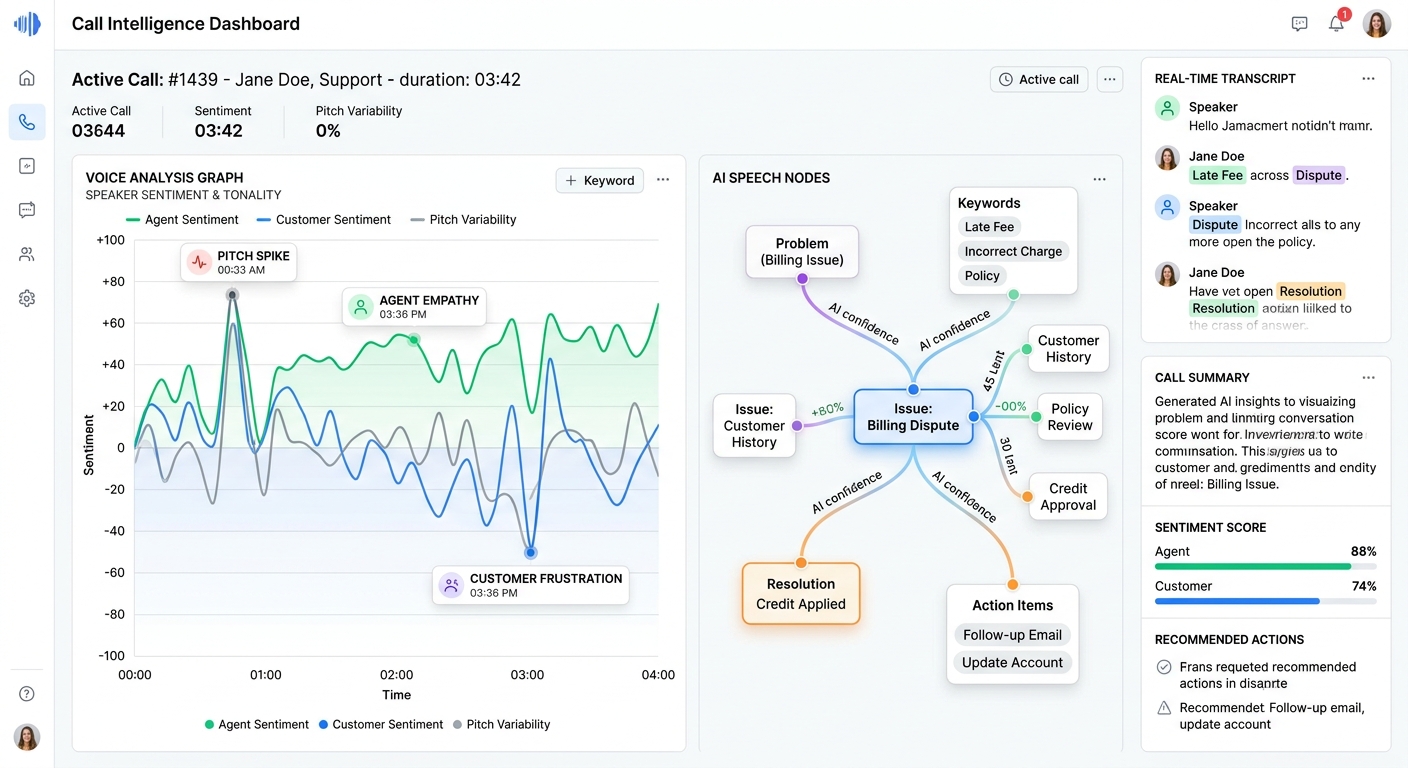
Analytics platform has been launched — a platform that transcribes every phone call, scores it against your company’s own quality criteria and turns the results into agent KPIs and coaching. It connects to 3CX, Asterisk, XCALLY, Genesys Cloud, Avaya and Cisco phone systems and works with Lithuanian, Latvian and English calls.
Mitsubishi Electric has released security updates to address multiple vulnerabilities across several industrial automation products, including GENESIS64 and the ICONICS Suite. These flaws could allow attackers to execute arbitrary code, bypass authentication, or cause denial-of-service conditions.
Google Project Zero analyzed how LLM-based systems (BigSleep) compare to traditional generative fuzzers (Fuzzilli) in finding V8 JavaScript engine vulnerabilities. Over six months, both methods independently discovered unique bugs, with an estimated overlap of approximately 25-60%.
LiquidAI has launched LFM3, a new generation of small foundation models built on a shared 2B-parameter backbone. The series includes text, vision, audio, and omni models designed for high-efficiency on-device deployment.
NVIDIA has released 'Nemotron-Personas' datasets for France and Belgium, designed to improve LLM accuracy regarding regional procedures, demographics, and cultural nuances. The update provides a complete post-training workflow—including data generation, LoRA fine-tuning via NVIDIA NeMo, and evaluation—to help developers transition from generic models to domain-specific agents.
Google DeepMind introduced Genie 4, a multimodal world model that enables real-time interactive simulations. It natively generates video, ambient audio, and responsive dialogue, utilizing Gemini 3.8 Flash to maintain physical consistency and handle multi-step reasoning.
NVIDIA has documented a threefold optimization approach to accelerate MoE inference, tested on the 124-billion-parameter Ling-3.0-flash model. By utilizing specialized Humming kernels, FP8 precision for the LM head, and Multi-Token Prediction, developers can achieve a 42.5% throughput increase and a 24.5% reduction in latency.
Google has updated its A2UI generative UI protocol to include swappable inference formats, addressing latency and reliability issues found in the previous Direct JSON approach. A new format, A2UI Express, reduces token usage by up to 3x and latency by up to 3x by using a concise Python-like syntax.
Google has launched Gemini Robotics Embodied Reasoning 2 (ER 2) in public preview on the Gemini platform. This model acts as a high-level cognitive layer for robotics, capable of planning, self-correcting tasks, and managing multi-robot systems via natural language instructions.
NIST has published NISTIR 8547, a definitive guide for migrating to quantum-resistant standards. The report addresses the urgent need to protect data against 'harvest now, decrypt later' attacks, aligning with federal mandates for high-impact systems.
n8n 3.0 has entered beta, focusing on core architectural stability, stricter security defaults, and the removal of legacy features. The transition to a container-only model for self-hosting is now mandatory, and users must use the built-in Migration Report to handle breaking changes before the stable release in December.
Researchers have developed TraceQuery, a sparse decoding framework that reduces the computational cost of diffusion large language models (dLLMs). By analyzing denoising trajectories, the method selectively recomputes only necessary token representations rather than performing redundant operations, maintaining high accuracy with fewer computations.
Researchers have introduced the Boa Compressor, an online tool utilizing a Mamba state-space model to compress long-form context into shorter representations in linear time. By distilling knowledge from full-context LLM interactions, this method allows for efficient per-query inference without the massive latency overhead of transformer-based compression.
Researchers introduced Recursive Semantic Divergence (RSD), an unsupervised metric that measures and penalizes inconsistency in LLM agent trajectories. By applying RSD as a reward signal during fine-tuning, models exhibit significantly more stable behavior and higher success rates across tool-use benchmarks.