Recent research demonstrates that current security monitors often fail by confusing injection exposure with an agent's actual commitment to perform an unsafe action. The author proposes a double-stratified evaluation method that separates exposure from behavior, significantly improving the ability to predict unsafe tool calls up to two steps in advance.
Amazon has enabled intent-driven UI automation by pairing Nova Act with the Bedrock AgentCore Browser Tool. This setup allows engineering teams to define test workflows through natural language instructions instead of maintaining rigid, selector-heavy codebases.
AssemblyAI has introduced Universal-3 Pro, a specialized speech-to-text model that allows developers to provide instructions directly to the transcription process. It supports verbatim and clean transcription, custom audio event tagging, and handles code-switching between six languages.
The first-party Claude API now supports larger data submissions through its Messages and Token Counting endpoints. Developers can now send requests up to 128 MB, a substantial upgrade from the previous 32 MB cap.
Anthropic has launched a beta Usage and Cost Analytics API, allowing organizations to track token usage and expenditure with greater precision. The new tool provides filtering and grouping capabilities across models, workspaces, API keys, and individual service accounts.
MoEngage successfully integrated over 400 internal REST APIs as agent tools using Amazon Bedrock AgentCore Gateway. This approach eliminated the need for manual MCP server maintenance, complex networking, and security risks associated with public internet exposure.
NVIDIA has introduced Nemotron 3.5 Super VL, a 120B-parameter multimodal model featuring a 1M token context window. The model utilizes a hybrid Mamba-2 and MoE architecture to balance reasoning capabilities with efficient inference, and is now available for deployment on Amazon EKS and SageMaker HyperPod.
Mistral AI has released Mistral Large 4 (Le Chonk), a 1-trillion-parameter open-weight model optimized for coding, cybersecurity, and reasoning. The model introduces three distinct reasoning modes to balance performance with inference costs and features enhanced guardrails for secure agent deployments.
IBM has released Granite Switch 4.1.1, a patch update for its modular language model architecture. The update introduces an improved multilingual speech-to-text model and a refined Decision adapter, all achieved without retraining the base model.
AWS introduced pre-built Ray Train Deep Learning Containers (DLCs) that consolidate PyTorch, CUDA, NCCL, and EFA networking libraries into a single tested image. This approach allows your team to deploy distributed training clusters on Amazon EKS without maintaining custom build pipelines or resolving complex driver compatibility issues.
AWS has updated its QA Studio reference solution, adding native support for multi-team organizational structures. The new capabilities include application-level ownership, automated health scoring based on CloudWatch metrics, and granular role-based access control.
Microsoft reports a 15-fold growth in AI agents within the M365 ecosystem over the past year, prompting new requirements for CISO-led security frameworks. The focus is shifting toward implementing granular identity controls and deep observability to prevent risks from unmanaged AI autonomy.
Google released a new Agents CLI evaluation namespace designed to help developers perform 'hill-climbing'—an iterative process of improving agent performance through testing, grading, and analysis. The tool enables regression tracking by comparing agent traces across model swaps or prompt changes, surfacing issues like tool-use regressions that standard unit tests miss.
Google has announced Gemini 4 Carbon, a new high-performance model designed for complex engineering and cybersecurity. The model excels in vulnerability detection, secure patching, and long-horizon reasoning, while introducing improved alignment and prompt-injection resistance.
NVIDIA has introduced Nemotron 3.5 Transcribe, an open-weight, promptable model for speech-to-text, speaker diarization, and translation. It utilizes a hybrid Mamba-Transformer architecture to achieve industry-leading performance with only 4 billion active parameters.
AssemblyAI has released AssemblyAI-TTS-1, a text-to-speech model built for voice agents. It features sub-100ms latency, 4,000+ available voices, and instant voice cloning, priced at $15 per 1M characters without concurrency limits.
Researchers have proposed LOTUS, a framework for hallucination detection that uses multilinear low-rank decomposition to extract signals from hidden LLM layers. By analyzing peak activations and cross-layer patterns, the method identifies incorrect responses more effectively than existing pooling-based techniques.
Developers can now enforce specific content safety guidelines directly within API requests to the Grok models. By adding a guidelines array to Chat Completions or Responses requests, you can control the handling of NSFW, violence, and profanity categories.
NVIDIA released CUDA 13.4, adding hardware-transparent memory boundary enforcement for GPU sharing. Paired with the new open-source GPU Fractioning Operator and KAI Scheduler v0.18.0, teams can now define specific memory requests, burst limits, and compute modes directly in Kubernetes Pod annotations.
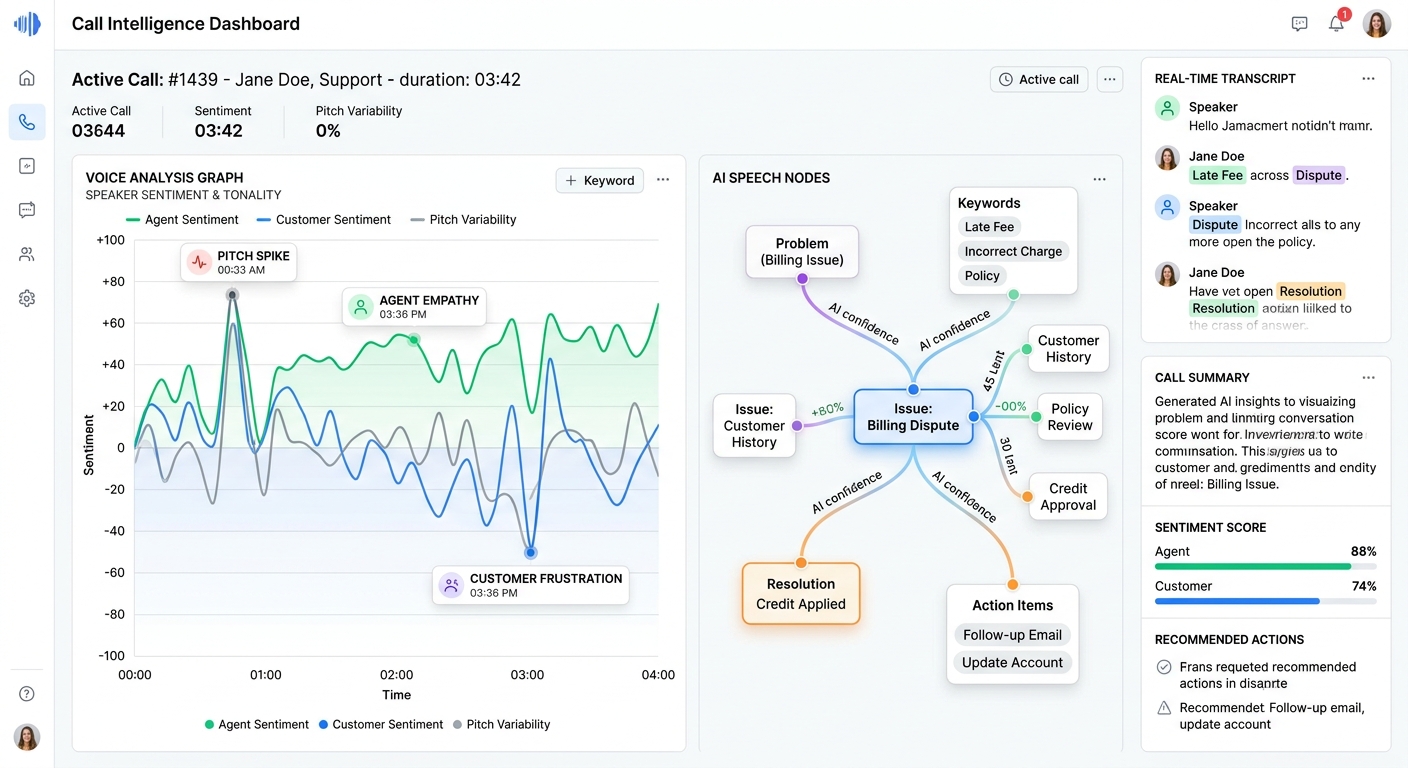
Analytics platform has been launched — a platform that transcribes every phone call, scores it against your company’s own quality criteria and turns the results into agent KPIs and coaching. It connects to 3CX, Asterisk, XCALLY, Genesys Cloud, Avaya and Cisco phone systems and works with Lithuanian, Latvian and English calls.
Google Project Zero analyzed how LLM-based systems (BigSleep) compare to traditional generative fuzzers (Fuzzilli) in finding V8 JavaScript engine vulnerabilities. Over six months, both methods independently discovered unique bugs, with an estimated overlap of approximately 25-60%.
LiquidAI has launched LFM3, a new generation of small foundation models built on a shared 2B-parameter backbone. The series includes text, vision, audio, and omni models designed for high-efficiency on-device deployment.