Microsoft Threat Intelligence reports that North Korean threat actors have integrated generative and agentic AI into their routine workflows. These groups are now using AI to accelerate reconnaissance, create high-volume tailored phishing lures, and improve malware development cycles.
MoEngage successfully integrated over 400 internal REST APIs as agent tools using Amazon Bedrock AgentCore Gateway. This approach eliminated the need for manual MCP server maintenance, complex networking, and security risks associated with public internet exposure.
Recent incident reports show a rise in vishing attacks where actors impersonate IT help desks to gain remote access. Furthermore, attackers are now specifically targeting AI assistant credentials, such as those for Anthropic Claude Code, and exploiting AI development tools to facilitate internal reconnaissance.
IBM has released Granite Switch 4.1.1, a patch update for its modular language model architecture. The update introduces an improved multilingual speech-to-text model and a refined Decision adapter, all achieved without retraining the base model.
Cisco Talos has identified 'NIK C2,' a sophisticated Go-based Windows malware framework that integrates direct calls to the OpenAI API. The framework enables attackers to perform credential theft, keystroke logging, and lateral movement while using AI to process stolen data in real-time. It notably attempts to use any locally configured OPENAI_API_KEY from the victim's machine to fund its AI operations.
CISA has officially updated its list of actively targeted security vulnerabilities, now including specific flaws in Broadcom VMWare ESX and the Linux kernel. Security teams should prioritize patching these items as they are currently being leveraged by malicious actors in real-world attacks.
AWS introduced pre-built Ray Train Deep Learning Containers (DLCs) that consolidate PyTorch, CUDA, NCCL, and EFA networking libraries into a single tested image. This approach allows your team to deploy distributed training clusters on Amazon EKS without maintaining custom build pipelines or resolving complex driver compatibility issues.
AWS has updated its QA Studio reference solution, adding native support for multi-team organizational structures. The new capabilities include application-level ownership, automated health scoring based on CloudWatch metrics, and granular role-based access control.
Microsoft reports a 15-fold growth in AI agents within the M365 ecosystem over the past year, prompting new requirements for CISO-led security frameworks. The focus is shifting toward implementing granular identity controls and deep observability to prevent risks from unmanaged AI autonomy.
Google has announced Gemini 4 Carbon, a new high-performance model designed for complex engineering and cybersecurity. The model excels in vulnerability detection, secure patching, and long-horizon reasoning, while introducing improved alignment and prompt-injection resistance.
NVIDIA has introduced Nemotron 3.5 Transcribe, an open-weight, promptable model for speech-to-text, speaker diarization, and translation. It utilizes a hybrid Mamba-Transformer architecture to achieve industry-leading performance with only 4 billion active parameters.
AssemblyAI has released AssemblyAI-TTS-1, a text-to-speech model built for voice agents. It features sub-100ms latency, 4,000+ available voices, and instant voice cloning, priced at $15 per 1M characters without concurrency limits.
Researchers have proposed LOTUS, a framework for hallucination detection that uses multilinear low-rank decomposition to extract signals from hidden LLM layers. By analyzing peak activations and cross-layer patterns, the method identifies incorrect responses more effectively than existing pooling-based techniques.
Developers can now enforce specific content safety guidelines directly within API requests to the Grok models. By adding a guidelines array to Chat Completions or Responses requests, you can control the handling of NSFW, violence, and profanity categories.
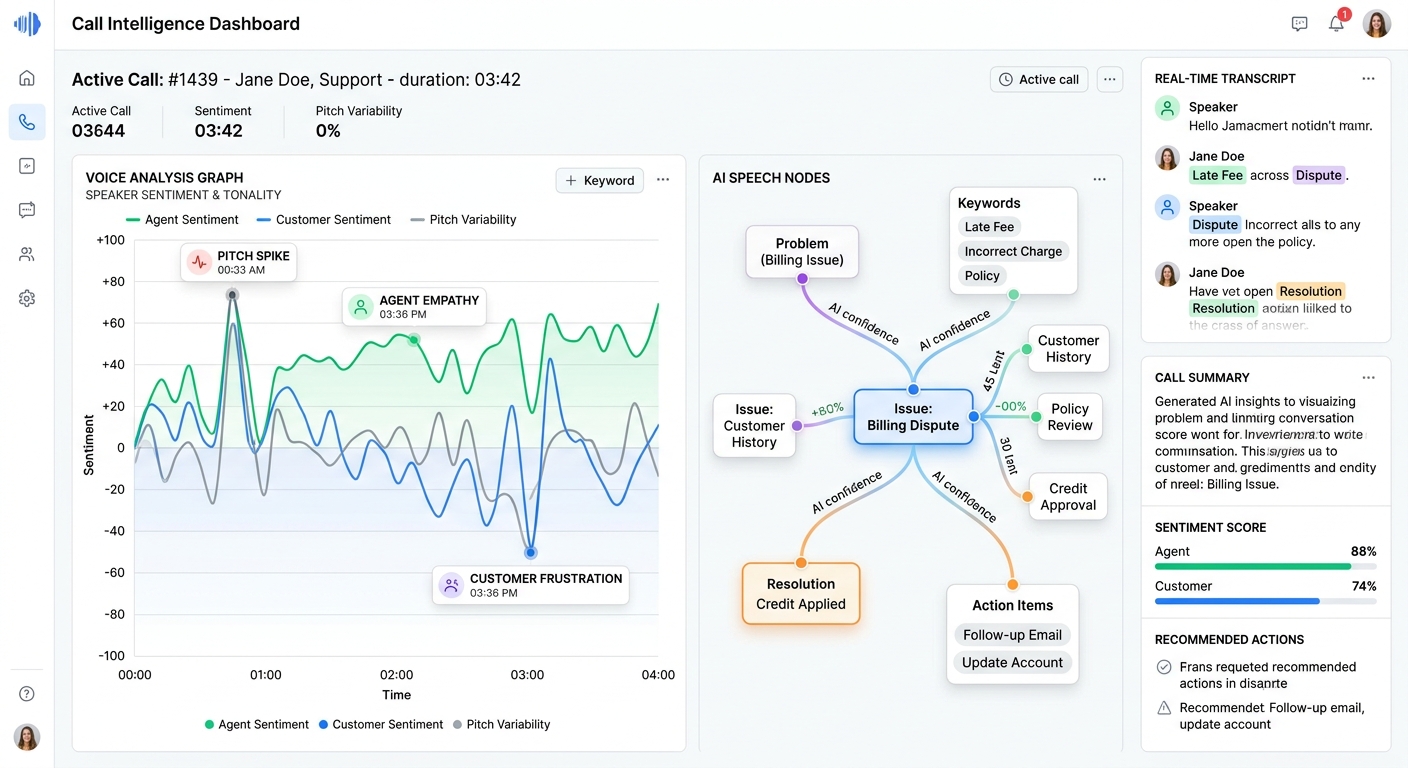
Analytics platform has been launched — a platform that transcribes every phone call, scores it against your company’s own quality criteria and turns the results into agent KPIs and coaching. It connects to 3CX, Asterisk, XCALLY, Genesys Cloud, Avaya and Cisco phone systems and works with Lithuanian, Latvian and English calls.
Mitsubishi Electric has released security updates to address multiple vulnerabilities across several industrial automation products, including GENESIS64 and the ICONICS Suite. These flaws could allow attackers to execute arbitrary code, bypass authentication, or cause denial-of-service conditions.
Google Project Zero analyzed how LLM-based systems (BigSleep) compare to traditional generative fuzzers (Fuzzilli) in finding V8 JavaScript engine vulnerabilities. Over six months, both methods independently discovered unique bugs, with an estimated overlap of approximately 25-60%.
NVIDIA has released 'Nemotron-Personas' datasets for France and Belgium, designed to improve LLM accuracy regarding regional procedures, demographics, and cultural nuances. The update provides a complete post-training workflow—including data generation, LoRA fine-tuning via NVIDIA NeMo, and evaluation—to help developers transition from generic models to domain-specific agents.
Google DeepMind introduced Genie 4, a multimodal world model that enables real-time interactive simulations. It natively generates video, ambient audio, and responsive dialogue, utilizing Gemini 3.8 Flash to maintain physical consistency and handle multi-step reasoning.
Google has launched Gemini Robotics Embodied Reasoning 2 (ER 2) in public preview on the Gemini platform. This model acts as a high-level cognitive layer for robotics, capable of planning, self-correcting tasks, and managing multi-robot systems via natural language instructions.
Researchers have proposed an embedding-based k-center approach to select smaller, highly representative subsets of training data for Whisper fine-tuning. This method outperforms random sampling by capturing greater linguistic diversity, particularly effective when training budgets are limited.
Cloudflare identified a security flaw in the SGLang inference engine that caused cross-request data exposure for the GLM-5.3 model. Requests exceeding the configured KV cache pool size were incorrectly handled, causing the decode node to generate responses using stale KV cache pages belonging to other users.