Anthropic launched Claude Frontier Academy, a $100 million program to train 10,000 engineers as 'Frontier Deployed Engineers' (FDEs) by the end of 2027. The first cohorts, running in San Francisco, New York and London, include engineers from Accenture, Bain, Capgemini, Commonwealth Bank of Australia, Deloitte, McKinsey, Morgan Stanley and Novo Nordisk. The program follows a medical-residency-style model: a multi-day in-person training followed by a 12-week residency leading a real Claude deployment at their own organization, with assessments and badges along the way.
Google DeepMind published research introducing SynthIDBio, a system that watermarks AI-designed proteins without compromising their function. Built on Google's SynthID technology (used for text/image watermarking), the system works with ProteinMPNN, a popular protein design tool, to embed detectable signals during the amino acid placement process. The watermark is randomly distributed across the protein sequence and can be detected using a cryptographic-like key, even though proteins only use 20 amino acids and have far less 'room' to hide signals than images.
A team from Carnegie Mellon, MIT, NYU, and Stanford built an AI called Ataraxos that beat Pim Niemeijer, considered the best Stratego player of all time, 15 games to one with four draws. Unlike DeepMind's earlier DeepNash, Ataraxos uses a belief model to estimate hidden opponent pieces and search ahead before each move, and was trained on just 16 GPUs for about a week at a cost of a few thousand dollars, versus an estimated $3-4.5 million for DeepNash's training run. The AI also won 38 of 40 games against challengers at the 2025 Stratego World Championship and generalized to other games like Barrage Stratego, Hanabi, and dou dizhu.
Google is rolling out Guided Vision in Gemini Live on compatible Android devices, allowing users to share their phone camera and get real-time audio descriptions of surroundings, objects, and text like fine print. The feature is aimed at people who are blind or have low vision, similar to Apple's VoiceOver Live Recognition. Users can ask follow-up questions, such as reading an expiration date on an identified item, and the feature is also available via Google TalkBack or an accessibility shortcut on Android 9+.
OpenAI launched two new shopping features in ChatGPT globally: a virtual try-on tool that lets users upload a photo to see how clothing or accessories would look on them, and a Favorites feature to save products to a Library for later. Both features use the newly launched ChatGPT Images 2.5 model, which OpenAI says improves lighting, textures, instruction-following and reduces image generation latency. This follows OpenAI's earlier pivot away from an instant checkout feature that underperformed.
AWS published a walkthrough for connecting Claude Desktop (running on Amazon Bedrock) to a managed, MCP-compatible Web Search tool through Amazon Bedrock AgentCore Gateway. The integration uses AWS IAM Identity Center for SSO, federated through Amazon Cognito, with JWT-based authentication securing all traffic to the gateway. Web Search is backed by an Amazon web index spanning tens of billions of documents, keeping all query traffic inside AWS infrastructure with no external API keys required. It is currently available in three AWS Regions: us-east-1, eu-west-1, and ap-northeast-1.
NVIDIA released a detailed workflow for fine-tuning its Nemotron 3.5 ASR multilingual streaming model on Saudi Arabic dialects (Najdi and Hijazi). Using minimal data curation, replay mixing with FLEURS data, duration-based bucketing, and partial encoder unfreezing, they reduced word error rate on the target dialects from 55.05% to 29.96% while also slightly improving English and other Arabic performance. The post also covers decoding tweaks and speaker diarization extensions for multi-speaker transcription.
Allen Institute for AI (Ai2) has open-sourced AstaBrief 8B, a model built on Qwen3-8B that turns research questions and retrieved literature excerpts into cited scientific reports. It's now live in Ai2's Asta platform as a 'Fast mode' alongside a Claude-powered 'Thinking mode', generating reports in about 51.1 seconds on average compared to 178.5 seconds for the Claude pipeline — roughly 3.5x faster. Ai2 trained the model using supervised fine-tuning on 47K examples (from 90K filtered real research queries) followed by DPO on about 6K preference pairs, and found that filtering training data for citation density was the single most effective lever for improving grounding quality.
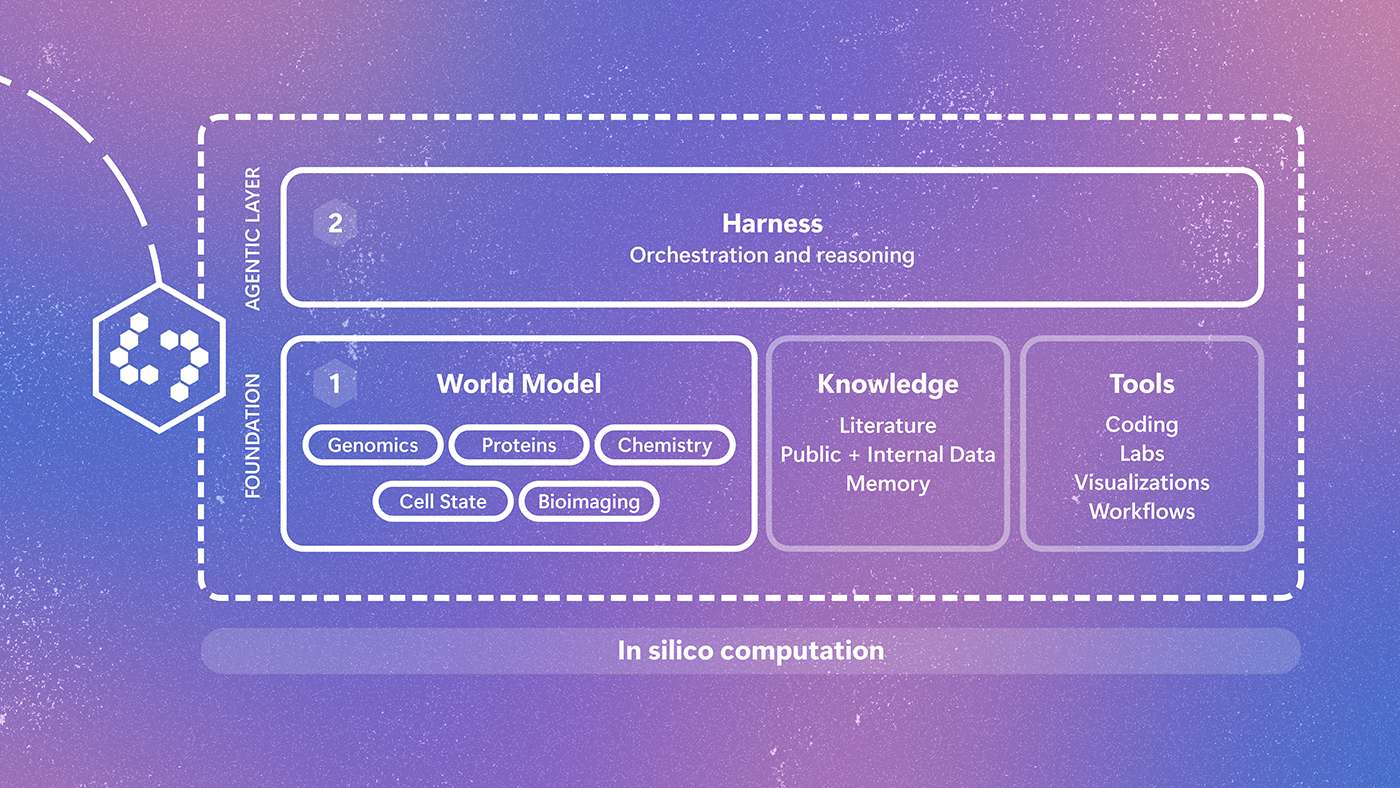
Microsoft Research introduced Quine, a multimodal AI system designed to model biology across scales — from genes and proteins to cells and tissues — and connect that model with scientific tools, literature, and researchers. In collaboration with the Broad Institute of MIT and Harvard, Quine was used to prioritize compounds predicted to shift cancer cell states, with several top candidates validated in wet-lab experiments. Microsoft is opening a 'Quine Fellows' program to give select scientists access to the system, while stressing it is experimental research technology not intended for clinical use.
Google's TPU engineering team reproduced the Allen Institute for AI's fully open Olmo 3 7B model from scratch using MaxText, a JAX/XLA training framework, matching Ai2's PyTorch/GPU reference run on held-out metrics rather than just the training loss curve. The reproduction covered stage-1 pre-training (~5.93T tokens, 1.41M steps) and stage-2 mid-training annealing, including porting Olmo 3's non-standard architecture (reordered-norm block, QK-norm, 3:1 sliding/global attention) to JAX. The team also caught and fixed a subtle data-loader bug that caused training loss to falsely appear better due to memorization, verified by held-out evaluation.
Google engineers describe how they implemented sparse spatio-temporal attention for video diffusion models on TPU v6e chips, converting the theoretical sparsity of the Sparse VideoGen (SVG) approach into real hardware speedups. Through a progression of kernel optimizations (full/boundary tile specialization, tile-size tuning, and mask-tile alignment), they reduced attention kernel latency from 96.37ms (naive sparse) to 32.76ms, a 2.40x speedup over dense Splash Attention on a single TPU v6e chip, using 75.6K tokens, 10 heads, and head dimension 128.
Mistral AI announced a new hub in Munich, Germany, focused on Physics AI and Industrial AI, serving enterprise partners in automotive, energy, aerospace, and manufacturing. The hub follows Mistral's acquisition of Emmi AI in May 2026, bringing over 30 physicists and engineers to the company. Mistral is working with BMW on crash simulations and Siemens Energy on industrial AI applications, and has formed a research partnership with TUM on automotive aerodynamics.
Google DeepMind unveiled SynthID Bio, a watermarking technology that embeds an imperceptible, verifiable signature into AI-designed proteins and 3D structures without compromising their biological function. The system was tested on protein binders (VEGF-A, SARS-CoV-2 spike RBD, PD-L1) using AlphaProteo and a modified ProteinMPNN, and also fine-tuned into AlphaFold 3's diffusion network for watermarking predicted 3D structures. DeepMind is also collaborating with Stanford's Hie lab and Arc Institute to apply the approach to Evo 2, a genomic model, to watermark designed bacteriophage genomes. The goal is to strengthen biosecurity by helping DNA synthesis screening providers and public databases verify the provenance of AI-generated biological designs.
AI music generator Suno has launched a public beta feature called Speech, which generates synthetic voiceovers alongside AI-composed background music as a single track. Users can choose Simple mode (prompt-based) or Advanced mode (custom script with voice gender, style, and variation controls). The feature supports a maximum duration of about eight minutes and the background music can be toggled off for clean speech output.
Google Cloud introduced, in public preview, a remote MCP server that exposes the gcloud and bq command-line tools to AI agents via two tools: run_gcloud_command and run_bq_command. The server runs in an isolated, network-restricted sandbox on Google Cloud infrastructure, removing the need for agents to install or maintain local CLI binaries. It uses Agent Identity, OAuth 2.0, and IAM for authentication, integrates with Model Armor to screen for prompt injection, and supports Cloud Audit Logging for full visibility into tool calls.
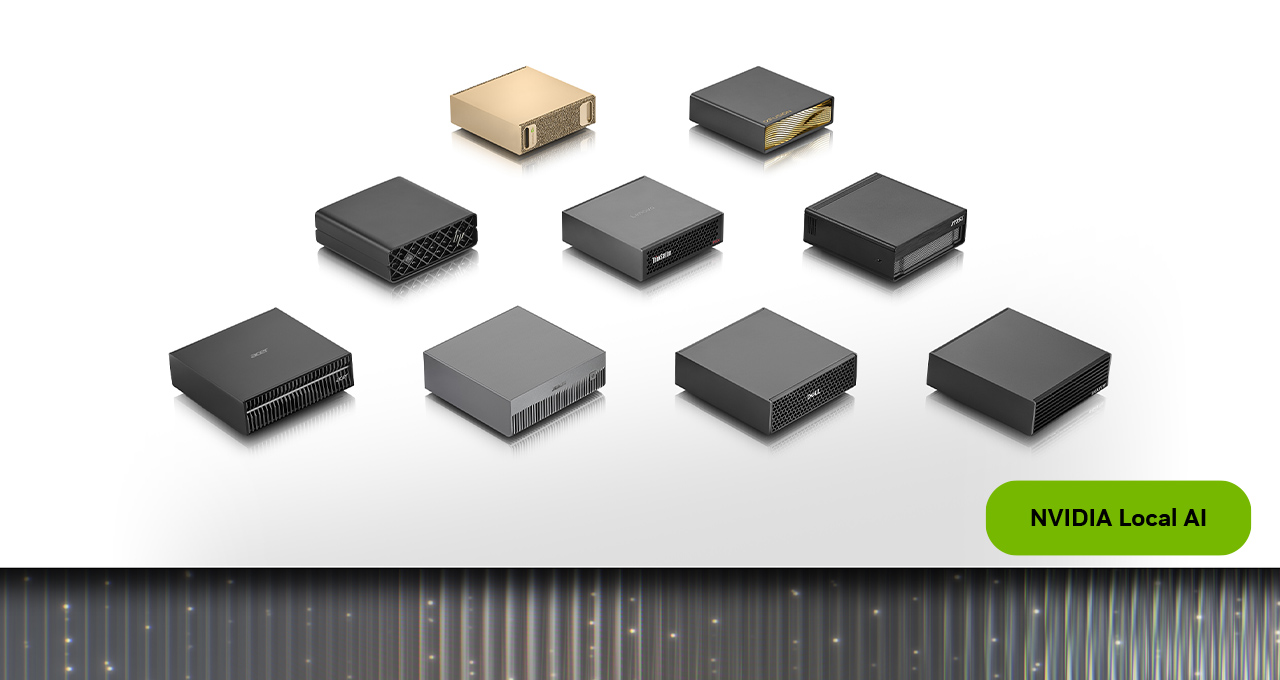
NVIDIA is releasing a new 64GB unified memory configuration of its DGX Spark personal AI supercomputer, available from partners like Acer, ASUS, Dell, HP, Gigabyte and MSI starting Oct. 23 at $4,999. The system runs up to 100-billion-parameter models locally on device, and two units can be clustered via NVIDIA Sync Cluster Assistant to pool memory to 128GB and support models up to 200 billion parameters, with up to 1.7x performance gains in NVIDIA's Qwen 3.8 27B test. It ships with the NVIDIA Agent Toolkit, CUDA-X AI libraries, Nemotron models and support for Ollama, vLLM and PyTorch out of the box.
Google announced that its Antigravity SDK now supports running agentic workflows locally and offline, with initial support for Gemma 4 26B A4B running via Google AI Edge's LiteRT. Developers can build agents that run entirely on-device, without cloud API costs or internet dependency. Google also demonstrated a hybrid 'Architect-Builder' pattern where a cloud model (Gemini 3.8 Flash) plans tasks and a local swarm of Gemma 4 26B instances does the heavy execution, keeping source code off the cloud.
Google Cloud API Gateway now supports acting as a remote MCP server in Public Preview. By annotating an existing OpenAPI spec (x-google-api-management.mcp and x-google-mcp-tool), teams can expose their current REST operations as agent-ready MCP tools without building or hosting a separate MCP server. Existing authentication (JWT/API key), quotas, and logging continue to apply unchanged since MCP and REST traffic share one policy path.





.png)