Google DeepMind published research introducing SynthIDBio, a system that watermarks AI-designed proteins without compromising their function. Built on Google's SynthID technology (used for text/image watermarking), the system works with ProteinMPNN, a popular protein design tool, to embed detectable signals during the amino acid placement process. The watermark is randomly distributed across the protein sequence and can be detected using a cryptographic-like key, even though proteins only use 20 amino acids and have far less 'room' to hide signals than images.
A team from Carnegie Mellon, MIT, NYU, and Stanford built an AI called Ataraxos that beat Pim Niemeijer, considered the best Stratego player of all time, 15 games to one with four draws. Unlike DeepMind's earlier DeepNash, Ataraxos uses a belief model to estimate hidden opponent pieces and search ahead before each move, and was trained on just 16 GPUs for about a week at a cost of a few thousand dollars, versus an estimated $3-4.5 million for DeepNash's training run. The AI also won 38 of 40 games against challengers at the 2025 Stratego World Championship and generalized to other games like Barrage Stratego, Hanabi, and dou dizhu.
Allen Institute for AI (Ai2) has open-sourced AstaBrief 8B, a model built on Qwen3-8B that turns research questions and retrieved literature excerpts into cited scientific reports. It's now live in Ai2's Asta platform as a 'Fast mode' alongside a Claude-powered 'Thinking mode', generating reports in about 51.1 seconds on average compared to 178.5 seconds for the Claude pipeline — roughly 3.5x faster. Ai2 trained the model using supervised fine-tuning on 47K examples (from 90K filtered real research queries) followed by DPO on about 6K preference pairs, and found that filtering training data for citation density was the single most effective lever for improving grounding quality.
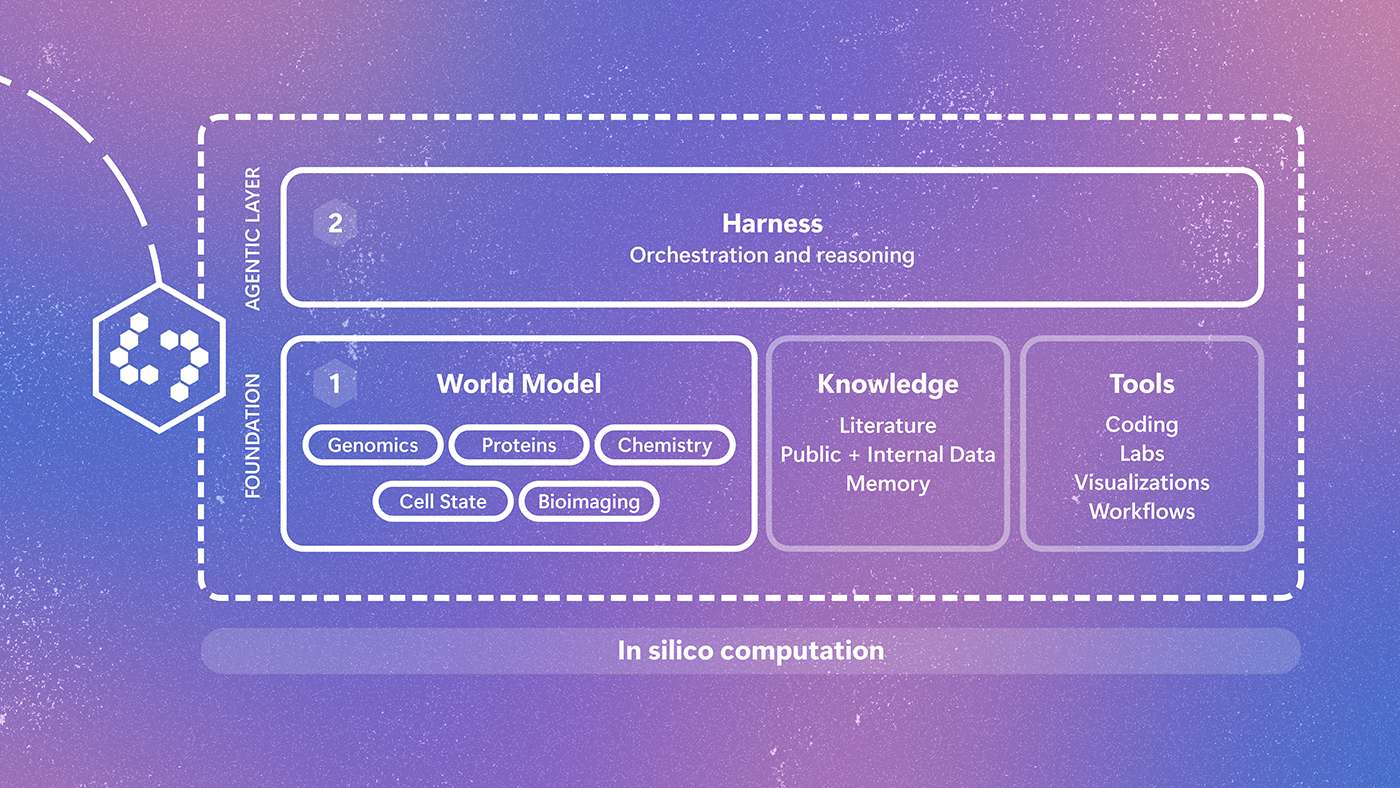
Microsoft Research introduced Quine, a multimodal AI system designed to model biology across scales — from genes and proteins to cells and tissues — and connect that model with scientific tools, literature, and researchers. In collaboration with the Broad Institute of MIT and Harvard, Quine was used to prioritize compounds predicted to shift cancer cell states, with several top candidates validated in wet-lab experiments. Microsoft is opening a 'Quine Fellows' program to give select scientists access to the system, while stressing it is experimental research technology not intended for clinical use.
Google's TPU engineering team reproduced the Allen Institute for AI's fully open Olmo 3 7B model from scratch using MaxText, a JAX/XLA training framework, matching Ai2's PyTorch/GPU reference run on held-out metrics rather than just the training loss curve. The reproduction covered stage-1 pre-training (~5.93T tokens, 1.41M steps) and stage-2 mid-training annealing, including porting Olmo 3's non-standard architecture (reordered-norm block, QK-norm, 3:1 sliding/global attention) to JAX. The team also caught and fixed a subtle data-loader bug that caused training loss to falsely appear better due to memorization, verified by held-out evaluation.
Google engineers describe how they implemented sparse spatio-temporal attention for video diffusion models on TPU v6e chips, converting the theoretical sparsity of the Sparse VideoGen (SVG) approach into real hardware speedups. Through a progression of kernel optimizations (full/boundary tile specialization, tile-size tuning, and mask-tile alignment), they reduced attention kernel latency from 96.37ms (naive sparse) to 32.76ms, a 2.40x speedup over dense Splash Attention on a single TPU v6e chip, using 75.6K tokens, 10 heads, and head dimension 128.
Google DeepMind unveiled SynthID Bio, a watermarking technology that embeds an imperceptible, verifiable signature into AI-designed proteins and 3D structures without compromising their biological function. The system was tested on protein binders (VEGF-A, SARS-CoV-2 spike RBD, PD-L1) using AlphaProteo and a modified ProteinMPNN, and also fine-tuned into AlphaFold 3's diffusion network for watermarking predicted 3D structures. DeepMind is also collaborating with Stanford's Hie lab and Arc Institute to apply the approach to Evo 2, a genomic model, to watermark designed bacteriophage genomes. The goal is to strengthen biosecurity by helping DNA synthesis screening providers and public databases verify the provenance of AI-generated biological designs.